Showing posts with label business culture. Show all posts

Oct 12, 2025

Lessons Learned from the U.S.-Japan Trade War


12 October 2025

@AndresAnhtho

The U.S.-Japan trade war of the 1980s, culminating in the Plaza Accord of 1985, offers lessons relevant to the current U.S.-China trade war and its impact on ASEAN trade agreements, including Vietnam’s role.

The text below summarises key lessons from the U.S.-Japan trade war and the terms of the Plaza Accord aimed at reducing Japan’s trade surplus, drawing on insights from our prior discussions on Vietnam's role in ASEAN.

Lessons Learned from the U.S.-Japan Trade War

  • Currency Revaluation Has Limited Impact on Structural Trade Imbalances
The U.S.-Japan trade war highlighted that Japan’s trade surplus was driven by structural factors, such as high savings rates, export-oriented industrial policies, and non-tariff barriers, rather than just currency valuation. Despite the Plaza Accord’s success in appreciating the yen, the U.S. trade deficit with Japan persisted due to these deeper issues.

Vietnam’s trade surplus with the U.S. ($105 billion in 2025) similarly stems from structural advantages like low labour costs and FDI-driven exports. Currency adjustments alone won’t resolve trade tensions, as demonstrated by Vietnam’s need for governance reforms to enhance transparency and align with global trade standards, thereby mitigating U.S. tariff risks.
  • Currency Interventions Can Trigger Unintended Economic Consequences
The rapid yen appreciation (from ¥242 to ¥120 per USD by 1988) made Japanese exports costlier, contributing to an asset price bubble. Japan’s expansionary monetary and fiscal policies to counter this led to the bubble’s burst, sparking the “Lost Decade” of stagnation. While the Plaza Accord didn’t solely cause this, it set off a chain of events exacerbated by policy missteps.

Vietnam must be cautious of external pressures to revalue the dong, as rapid currency shifts could disrupt its export-led growth. Governance reforms in 2025, like digital trade integration, aim to stabilize Vietnam’s economy against such shocks, but overreliance on FDI and exports mirrors Japan’s vulnerabilities.
  • Protectionist Measures Escalate Tensions Without Long-Term Solutions:
U.S. actions, like 100% tariffs on Japanese electronics and semiconductors in 1987, temporarily curbed imports but didn’t address underlying competitiveness gaps. Japan’s concessions, such as voluntary export restraints and market access agreements (e.g., 20% U.S. semiconductor market share), reduced tensions but didn’t eliminate the trade deficit.

The U.S.’s 46% tariffs on Vietnamese goods in 2025 risk escalating trade disputes, similar to Japan’s experience. Vietnam’s governance restructuring, including anti-corruption measures, aims to deflect U.S. criticism of unfair practices, but ASEAN’s fragmented response (e.g., Vietnam’s unilateral tariff talks) weakens collective bargaining, echoing Japan’s isolated concessions.
  • Domestic Reforms Are Critical to Mitigate Trade War Impacts
Japan’s failure to implement structural reforms (e.g., reducing import barriers) before the Structural Impediments Initiative (SII) in 1989 limited its ability to adapt to yen appreciation. Post-crisis, Japan’s private sector diversified through overseas investment (e.g., Toyota’s $22 billion in the U.S.) and technological upgrades, which helped maintain global competitiveness.

Vietnam’s 2025 governance reforms—streamlining bureaucracy, enhancing digital trade via the ASEAN Single Window, and improving transparency—are proactive steps to strengthen resilience against U.S. tariffs and Chinese competition. However, ASEAN-wide coordination on non-tariff barriers, as ATIGA emphasizes, is crucial to avoid Japan’s fate of domestic policy delays.
  • International Cooperation Requires Strategic Alignment
Japan, as a U.S. ally, faced pressure to sign the Plaza Accord to avoid harsher measures like export controls. Its compliance reflected geopolitical dependence, unlike China’s current resistance to similar deals. The Accord’s mixed success showed that cooperation must balance national interests.

Vietnam’s non-aligned stance and ASEAN’s neutrality allow flexibility but limit leverage against U.S. demands. Governance reforms signal Vietnam’s commitment to global trade rules, but ASEAN’s lack of unity (e.g., Malaysia’s 2025 chairmanship push for cohesion) risks weakening the region’s ability to negotiate collectively, unlike the G5’s coordinated Accord.

The terms of the Plaza Accord aimed at reducing Japan’s trade surplus will help you understand the relevance with lessons learned from this.

Terms of the Plaza Accord to Reduce Japanese Trade Surplus

The Plaza Accord, signed on September 22, 1985, by the G5 (U.S., Japan, West Germany, France, U.K.) at the Plaza Hotel in New York, aimed to address U.S. trade deficits by depreciating the U.S. dollar. Key terms targeting Japan’s trade surplus included:

  • Currency Market Intervention and Impact

The G5 agreed to intervene in currency markets to appreciate the Japanese yen (and German Deutsche Mark) against the U.S. dollar. Central banks sold dollars and bought yen, leading to a 50% yen appreciation (from ¥242 to ¥120 per USD by 1988). This made Japanese exports costlier, aiming to reduce Japan’s $50 billion trade surplus with the U.S.

U.S. exports became more competitive, but Japan’s surplus persisted due to structural barriers like import restrictions.[](https://en.wikipedia.org/wiki/Plaza_Accord)

  •  Monetary Policy Coordination and Impact

Japan pledged to maintain loose monetary policies to support yen appreciation and stimulate domestic demand, reducing reliance on exports. The U.S. is committed to tighter fiscal policies to curb deficits.

Japan’s expansionary policies fueled an asset bubble, contributing to economic instability, while U.S. deficit reduction was inconsistent.

  • Trade Policy Commitments

 Japan agreed to reduce trade barriers and increase imports of U.S. goods, addressing accusations of “unfair” practices like high tariffs and restricted market access. This laid the groundwork for later agreements like the 1986 semiconductor pact and 1989 SII. 

Japan’s market remained challenging for U.S. goods due to cultural preferences and structural issues, limiting deficit reduction.

  • Exchange Rate Targets

The Accord set implicit target ranges for currency revaluation, with the yen appreciating significantly within two years. The 1987 Louvre Accord later stabilised rates to halt excessive dollar depreciation.

The yen’s rapid rise disrupted Japan’s export industries, triggering recessionary pressures, while the U.S. saw temporary trade improvements.

Relevance to ASEAN and Vietnam

Currency Risks: Vietnam and ASEAN must avoid Japan’s fate of rapid currency appreciation, which could disrupt export-led growth. Vietnam’s governance reforms, like digital trade systems, aim to diversify economic drivers, but ASEAN’s exposure to Chinese imports via RCEP mirrors Japan’s post-Accord vulnerabilities.

Trade Policy Coordination: The Plaza Accord’s coordinated approach contrasts with ASEAN’s fragmented response to U.S. tariffs. Vietnam’s unilateral negotiations echo Japan’s concessions, risking regional cohesion under ATIGA.

Structural Reforms: Vietnam’s 2025 anti-corruption and transparency measures reflect Japan’s later SII efforts to align with global norms. However, ASEAN must accelerate ATIGA’s non-tariff barrier reductions to counter U.S. protectionism, learning from Japan’s delayed reforms.

Geopolitical Strategy: Unlike Japan’s U.S. alignment, Vietnam’s non-aligned stance and ASEAN’s neutrality require strategic diplomacy to resist Plaza-like agreements. Malaysia’s 2025 ASEAN push for unity could strengthen this, but internal divisions persist.

Conclusion

The U.S.-Japan trade war and Plaza Accord teach that currency interventions and protectionism offer short-term fixes but risk long-term economic damage, as seen in Japan’s Lost Decade. Structural reforms and diversified trade strategies are critical, as Vietnam’s 2025 governance restructuring demonstrates. 

For ASEAN, Japan’s experience underscores the need for unified trade policies under ATIGA to counter U.S.-China trade war pressures. The Accord’s terms—currency intervention, monetary coordination, and trade commitments—partially reduced Japan’s surplus but at a high cost, a cautionary tale for Vietnam and ASEAN navigating today’s trade landscape. 

As for my interest, I will continue to explore the Vietnamese-Japanese comparative values under new post. Let's keep in touch. 


About YourVietbooks.com
YourVietBooks is a selection of books and articles on and about Vietnam. Categories include: Culture, History, Vietnam War, Politics, Biographies, Contemporary Vietnam, International Relations, Doing Business in Vietnam, Reference and Languages, Zen Buddhism, Philosophy, Art and Literature.

WARNING: GOOGLE MAY USE SOME COOKIES, ANALYTICS AND ADSENSE ON THIS BLOG, BUT AS BLOGGER, WE DO NOT USE ANY COOKIES OURSELVES.

Oct 30, 2011

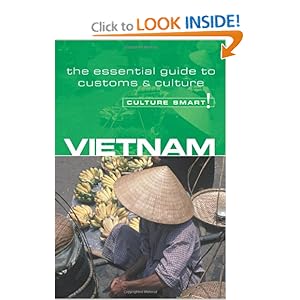
Vietnam - Culture Smart!: the essential guide to customs & culture

Original Title in English
By Author: Geoffrey Murray
Publisher: Series Culture Smart! (2006)


About the Series:
Culture Smart! provides essential information on attitudes, beliefs and behavior in different countries, ensuring that you arrive at your destination aware of basic manners, common courtesies, and sensitive issues. These concise guides tell you what to expect, how to behave, and how to establish a rapport with your hosts. This inside knowledge will enable you to steer clear of embarrassing gaffes and mistakes, feel confident in unfamiliar situations, and develop trust, friendships, and successful business relationships.
Culture Smart! offers illuminating insights into the culture and society of a particular country. It will help you to turn your visit-whether on business or for pleasure-into a memorable and enriching experience. Contents include

  • customs, values, and traditions
  • historical, religious, and political background
  • life at home
  • leisure, social, and cultural life
  • eating and drinking
  • do's, don'ts, and taboos
  • business practices
  • communication, spoken and unspoken
About the Author
GEOFFREY MURRAY has worked in Asia for more than forty years as a journalist, author, and teacher, including long stays in China, India, Japan, and Singapore. So far, he has published fifteen books on a wide range of business and socioeconomic issues, mostly about China, but also including Vietnam: Dawn of a New Market and Simple Guide to the Customs and Etiquette of Vietnam, both in 1997. He has closely followed developments in Vietnam ever since he served as a news agency war correspondent with the Australian army in the mid-1960s, winning the Australian government’s “Vietnam Logistic and Support Medal.” He is officially listed as a Vietnam War veteran by the Australian government.

To order: http://www.amazon.com/Vietnam-Culture-essential-customs-culture/dp/1857333330/ref=pd_sim_b_2


About YourVietbooks.com
YourVietBooks is a selection of books and articles on and about Vietnam. Categories include: Culture, History, Vietnam War, Politics, Biographies, Contemporary Vietnam, International Relations, Doing Business in Vietnam, Reference and Languages, Zen Buddhism, Philosophy, Art and Literature.
Some articles are available only in English, French, German or Vietnamese. Our qualified and experienced translators can provide translations of e-books or articles on demand. Read more...


Samples of Translation | Our Translators | Need a quote? | Contact us

May 28, 2011

Why has Japan Succeeded? Western Technology and the Japanese Ethos

Original Title in English by Author Prof. Michio MorishimaPublisher: Cambridge University Press, 1st Edition in 1982, reprinted 1985, 1988, ISBN 0521 269032
Backcover by Jeremy Hardie, The Times Literary Supplement
This book, by a distinguished Japanese economist now resident in the West, offers a new interpretation of the current success of the Japanese economy. By placing the rise of Japan in the context of its historical development, Michio Morishima shows how a strongly-held national ethos has interacted with religious, social and technological ideas imported from elsewhere to produce highly distinctive cultural traits.
While Professor Morishima traces the roots of modern Japan back as far as the introduction of Confucianism, Taoism and Buddhism from China in the sixth Century, he concentrates his observations on the last 120 years during which Japan has had extensive contracts in the West. He describes the swift rise of Japan to the status of a first-rate power following the Meiji Revolutin after 1867, in which Japan broke with a long history of isolationism, and which paved the way for the adoption of Western technology and the creation of a modern Western-style nation state; and a similarly meteoric rise from the devastation of the Second World War to Japan's present position. A range of factors in Japan's economic success are analysed: her characteristic dualistic social structure - corresponding to the divide between large and medium/small enterprises - the relations of government and big business, the poor reception of liberalism and individualism, and the strength of Japanese nationalism. Throughout, Professor Morishima emphasises the importance of the role played in the creation of Japanese capitalism by ethical doctrines as transformed under Japanese conditions, especially the Japanese Confucian tradition of complete loyalty to the firm and to the state.
This account, which makes clear the extent to which the economic rise of Japan is due to factors unique to its historical traditions, will be of interest to a wide general readership as well as to students of Japan and its history.
... stands out from the rest not only because of Professor Morishima's exceptional ability as an economist and his intimate native knowledge of Japan; but for the remarkable ambition to do for Japanese economic history what R.H.Tawney did for England in Religion and the Rise of Capitalism. He aims first to show how the distinctive version of Confucianism which took root in Japan helped to create totally different economic conditions from those in China; just as differing interpretations of the same Bible created quite different economic results in Protestant, as compared with Catholic, Europe. But the major part of the book is devoted to showing how Japanese Confucianism provided such as extraordinarily fertile ground for the adaptation and development of Western scientific ideas despite centuries of isolationism and technological neglect.
"His analysis is admirable for the range for the range of its insights and the modesty of its conclusions. It confirms again the necessity for, and the richess of, explanations of economic behaviour in terms of political theory and social change."


About the Author
Contents
Introduction
1. The Taika Reform and after
2. The Meiji Revolution
3. The Japanese Empire (I)
4. The Japanese Empire (II)
5. The San Francisco Regime
Conclusion
Postscript
Extracts:
Conclusion
"There are basically two kinds of religion; firstly, a religion which unites with the governing power in a state, acts as guardian of its legitimacy and whole role is to sanctify the lineage of the ruling tribe or tribes. There is secondly the kind of religion which turns its back on the ruling elements, which permeates those tribes and classes which are ruled, rather than ruling, and those who do not possess superior status, i.e. the religion which tries to bring help to people such as these. The former kind is in many cases the servant of politics; the latter, if not actually critical of the existing system, is at least apolitical. Provided that a religion whose objective is to help the ruled is rational it will be strongly critical of the existing regime, and such religions will deny the deities espoused by the ruling groups. At the same time they will also try to bring together all the non-ruling groups and form either some new, opposing political grouping, or some new spiritual movement. This kind of political or religious cohesion is securely founded on rational principles which transcend any idea of tribe - general, universal principles to which any individual must submit, whatever his tribe; the supreme duty of religions of this kind is help to the individual, not the legitimation of power. However there are also some religions which, while their objective remains the succour of the ruled, are nevertheless irrational and strongly magical and in cases such as these the subject classes are taught to turn their back on politics, to live the life of a mystical recluse, seeking only eternal youth, longevity and other items of physical well-being."
[.... In short
Type I (religion that serves to justify the ruling forces)>>>Confucianism
Type II (rational religion whose objective is to either the ruled or the individual)>>>Puritanism
Type III (the mystical religion whose objective is to assist the individual)>>>Taoism...]
In Japan, which imported both Confucianism and Taoism in China, not only Confucianism but Taoism as well was modified to become a religion of first, pro-government, type. Japanese Confucianism was a far more enthusiastic upholder of the existing regime than was Chinese Confucianism; its role in the Tokugawa period was that of an ideology legitimating the Bakufu regime as one approved by the Emperor; in the Meiji period its role was the justification of the so-called "Emperor regime" (Tennosei).
Shinto, the Japanese version of Taoism, could no longer be called a religion of the third type but was the religion of the imperial family in their role as the ruling clan. Such a transformation must really be regarded as quite natural in view of the fact that the religion had been brought into Japan by members of the ruling tribe or ruling class. Moreover, Japan was inevitably in a position where she was perpetually aware of the overwhelming cultural of technological gap which existed between her and other foreign countries (the Chinese Empire and the countries of the West). This kind of awareness of weakness rendered Japan's ruling classes at the same time both defensive and aggressive, and all the elements which were imported into Japan from elsewhere were modified so that they could be of use in Japan's own protection and development. Even Buddhism in Japan was not exception to this pattern. As far as doctrine was concerned, Buddhism was really split between the second and third types, although it varied depending on the sect. When Buddhism had been introduced into Japan, it has been used as far as possible to demonstrate the glory of the state. Since Buddhism was at the time disseminated throughout Eastern societies an international comparison of the cultural level of each country could be made by comparing the degree to which Buddhism flourished in each country. Behind Shotoku Taishi's attempts to promote Buddhism there lay an attempt to reconcile by means of Buddhism the sharp conflicts which existed within the ruling class at the time, but it cannot be denied that there was also a strong desire to try and raise Japan's cultural position vis-à-vis other countries.
A different reinterpretation of the same sacred texts can lead to the developement of a totally different life among the people at large, as has been made abundantly clear by Max Weber in the case of Western Europe, and the same phenomenon can be clearly perceived in the case of the East as well. In China, which possessed religions of the first and third type, the debauched lifestyle of the upper classes and the poverty and inertia of the lower classes seemed permanent fixtures (until the rise of hte Chinese Communist Party). Society was being stifled, and even when a dynasty changed the change brought no transformation with it. Japan, however, which had modified those same religions possessed by regime, could, after the Meiji Revolution, easily and rapidly put herself in a position where she could manipulate Western technology for the development of the Japanese state.
Japan, however, possessed only this first kind of religion (an ideology providing religious justification for the position of those in power and upholding the status quo) and lacked any religion of the second type (a religion founded on the basis of individuals with the aim of helping humanity). As a result, neither individualism nor internationalism developed and the people had no religion of their own, having become completely non-religious. (Shinshu, the largest sect in Japanese Budhism, must doctrinally be included in our second category of religions, but after the defeat of the Ikko uprising by Nobunaga its adherents did not fight against those in power.) Since this areligiousness of the Japanese people led them to be materialistic, and since they were at the same time on the other hand also nationalistic, they had no hesitation in working together for the material prosperity of Japan as a nation.
Such inclinations meant that the economy in Japan could easily tend towards the right. Since each individual member of the Japanese population was deeply permeated with a nationalist awareness the force of public opinion could (quite democratically) lead to the suppression of all liberalistic economic activity, even without the appearence of a strong leader or autocrat. During the period of the quasi-war regime after 1932 the people desired the appearance of a strong right government. The newspapers and other information media divined this national will, played to public opinion and incited it still further, so much so that the prevailing atmosphere was one desirous of the emergence of fascism. Once the wheels of this process had started there was no way of stopping them, and the economy as well was completely subjected to state control. Even when the liberal economy was, to all appearances, restored after the awr, it was not difficult to secure unity among public opinion. As long as the intentions of those in power were communicated to the people agreement was, in most cases, easily obtained, since the people had been educated in a way which deprived them of the heart to resist. As a result, although the "economic plans" championed by cabinets in the postwar years have had no legal force they have been acknowledged without any problem and people have cooperated in their realisation. If one terms Japan's prewar regime as a democratic fascist regime, then the postwar economy can perhaps be regarded as a kind of 'democratic "planned" economy'. Whatever the case, the modern economy which prospered in Western Europe under religion of the second type - an economy with an industry founded on the techniques of modern science - was in Japan successfully grafted onto a religion of the first type.