Showing posts with label Recommended Readings. Show all posts

Apr 30, 2015

Foreign Authors for Vietnamese: Recommended Readings for 2014


The Trial of Henry Kissinger (Google eBook)


Book Summary

"If the courts and lawyers of this country will not do their duty, we shall watch as the victims and survivors of this man pursue justice and vindication in their own dignified and painstaking way, and at their own expense, and we shall be put to shame."

Forget Pinochet, Milosevic, Hussein, Kim Jong-il, or Gaddafi: America need look no further than its own lauded leaders for a war criminal whose offenses rival those of the most heinous dictators in recent history-Henry Kissinger.

Employing evidence based on firsthand testimony, unpublished documents, and new information uncovered by the Freedom of Information Act, and using only what would hold up in international courts of law, THE TRIAL OF HENRY KISSINGER outlines atrocities authorized by the former secretary of state in Indochina, Bangladesh, Chile, Cyprus, East Timor, and in the plight of the Iraqi Kurds, "including conspiracy to commit murder, kidnap, and torture."

With the precision and tenacity of a prosecutor, Hitchens offers an unrepentant portrait of a felonious diplomat who "maintained that laws were like cobwebs," and implores governments around the world, including our own, to bring him swiftly to justice.


David Icke, The Lion Sleeps No More


Book Summary:

David Icke marks his 20th year of uncovering astounding secrets and suppressed information with the publication of his most amazing book yet. He takes the manipulation of the human race and the nature of reality to still new levels of understanding and he calls for humanity to rise from its knees and take back the world from the sinister network of families and non-human entities that covertly control us from cradle to grave. David has moved the global cutting edge so many times since his incredible awakening in 1990 until now.He describes what he calls the Moon Matrix, a fake reality broadcast from the Moon which is decoded by the human body/mind in much the same way as portrayed in the Matrix movie trilogy. The Moon Matrix has hacked into the human body-computer system, he says, and it is feeding us a manipulated sense of self and the world 24/7.


Huntington, The Clash of Civilisations and the Remaking of World Order


Book Summary:


An insightful and powerful analysis of the forces driving global politics today and into the next century. In the summer of 1993 Foreign Affairs published an article entitled 'The Clash of Civilizations?' by Samuel Huntington. No article, according to the editors of that distinguished journal, had generated more discussion since George Kennan's 'X' article on containment in the 1940's. Now, Huntington expands on his article, explores further the issues he raised then, and develops many new penetrating and controversial analyses. In the article, he posed the question whether conflicts between civilizations would dominate the future of world politics. In the book, he gives his answer, showing not only how clashes between civilizations are the greatest threat to world peace but also how an international order based on civilizations is the best safeguard against war.


Naomi Klein, The Shock Doctrine


Book Summary:


In THE SHOCK DOCTRINE, Naomi Klein explodes the myth that the global free market triumphed democratically. Exposing the thinking, the money trail and the puppet strings behind the world-changing crises and wars of the last four decades, The Shock Doctrine is the gripping story of how America’s “free market” policies have come to dominate the world-- through the exploitation of disaster-shocked people and countries. 


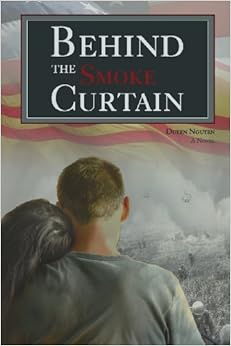
Duyen Nguyen, Behind the Smoke Curtain


Book Summary:

Behind the Smoke Curtain is a love story between an American journalist and a Vietnamese student at the Saigon University during the Vietnam War era. This work of romance will also provide readers with a panoramic view of the bloodiest and most gruesome war that America involved. While revealing the political lies and betrayals, its main purpose is to honor the young generation of American and Vietnamese soldiers who had sacrificed nobly and tremendously to fight for freedom and democracy.


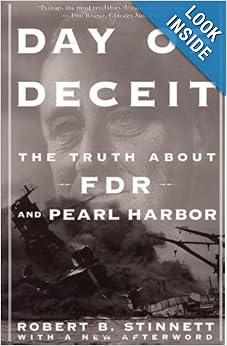
R Stinnett, Day of Deceit (Pearl Harbour Story)


Book Summary:

In Day of Deceit, Robert Stinnett delivers the definitive final chapter on America's greatest secret and our worst military disaster. Drawing on twenty years of research and access to scores of previously classified documents, Stinnett proves that Pearl Harbor was not an accident, a mere failure of American intelligence, or a brilliant Japanese military coup. By showing that ample warning of the attack was on FDR's desk and, furthermore, that a plan to push Japan into war was initiated at the highest levels of the U.S. government, he ends up profoundly altering our understanding of one of the most significant events in American history.


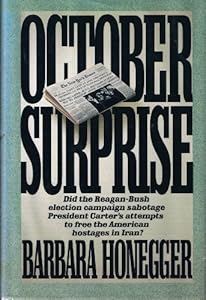
Barbara Honegger, October Surprise


Book Summary:

The author worked for Ronald Reagan during his campaign for the Presidency, then served on the White House staff, and the Department of Justice. In 1983 she was the first to resignation of conscience from the Reagan-Bush Administration. "Their guiding principles were that loyalty to a royalist version of the Presidency was more important than the Constitution, and that the truth was a 'problem' to be solved."


Let's pray for a better World in 2014


About YourVietbooks.com
YourVietBooks is a selection of books and articles on and about Vietnam. Categories include: Culture, History, Vietnam War, Politics, Biographies, Contemporary Vietnam, International Relations, Doing Business in Vietnam, Reference and Languages, Zen Buddhism, Philosophy, Art and Literature.
Some articles are available only in English, French, German or Vietnamese. Our qualified and experienced translators can provide translations of e-books or articles on demand. Read more...


Samples of Translation | Our Translators | Need a quote? | Contact us

Apr 1, 2015

The Great Economists of Modern Times on Audio Books


A toutes fins utiles, je vous remets 
ci joint les liens aux livres audio selon la liste des auteurs proposés pour le Séminaire "Méthodologie et Epistémologie de la Recherche" à l'Ecole doctorale de Paris-Est. Clicquez sur le lien sous chaque nom pour accéder aux livres audio sur le site audible.fr


YourVietBooks is a selection of books and articles on and about Vietnam. Categories include: Culture, History, Vietnam War, Politics, Biographies, Contemporary Vietnam, International Relations, Doing Business in Vietnam, Reference and Languages, Zen Buddhism, Philosophy, Art and Literature. Some articles are available only in English, French, German or Vietnamese. Our qualified and experienced translators can provide translations of e-books or articles on demand. Read more...


Samples of Translation | Our Translators | Need a quote? | Contact us

Foreign Authors for Vietnamese: Useful References for Vietnam War Studies

Original Titles in English

Vietnam War / General

"Let us not lose sight of what actually happened. In this particular 'mistake,' at least 3 million people died, only 58,000 of whom were Americans. These 3 million people died crushed in the mud, riddled with shrapnel, hurled out of helicopters, impaled on sharpened bamboo, obliterated in carpets of explosives dropped from bombers flying so high they could only be heard and never seen; they died reduced to chunks by one or more land mines, finished off by a round through the temple or a bayonet in the throat, consumed by sizzling phosphorus, burned alive with jellied gasoline, strung up by their thumbs, starved in cages, executed after watching their babies die, trapped on the barbed wire calling for their mothers. They died while trying to kill, they died while trying to kill no one, they died heroes, they died villains, they died at random, they died most often when someone who had no idea who they were, killed them under the orders of someone who had even less idea than that. Some of the dead were sent home to their families, some were reduced to such indistinguishable pulp that they could not be recovered. All 3 million died in pain, often so intense that death was a relief. They all left someone behind. They all became markers visited by those who needed to remember and not forget. The loss was enormous, and 'mistake' is no way to account for it. A course of behavior that kills 3 million people for no good reason cannot be passed off as something for which the generic response is Excuse Me."

-- From "Our War: What We Did in Vietnam and What It Did To Us" by David Harris, pp. 15-16. (New York: Times Books, Random House, 1996)


Gibson, James William. The Perfect War: Technowar in Vietnam. New York: Atlantic Monthly Press, 1986. 523 pages.

James Gibson is a left-of-center scholar who noticed a curious lack of interest in addressing the failure of U.S. policy in Vietnam during the years following the war. Pundits were quick to use Vietnam as a point of departure for discussions of other topics, but they carefully avoided discussing the war itself. Liberals felt that Vietnam was a mistake, conservatives felt that we lost due to self-imposed restraints, and no one examined the evidence.

[Photo]Gibson's loose thesis is that the U.S. fought the war as an affair of statistics and technology, and made the mistake of assuming that the enemy was fighting the same war. The assumption was that the enemy would have to acknowledge our superior firepower and our higher body counts, and then they would surrender. For Washington, the war was a logistical exercise in production: when certain quotas were met, then certain boundaries were redrawn to reflect newly-secured areas on the map. But when reports from the field were skewed to reflect these priorities, it only served to increase our bureaucratic isolation. Ultimately the managers in Washington were far removed from the realities in Vietnam, and had become the dupes of their own definitions.


Halberstam, David. The Best and the Brightest. Greenwich CT: Fawcett Publications, 1973. 831 pages.

David Halberstam's monumental history of how the U.S. got involved in Vietnam has proved so influential that its title phrase has entered the language. Halberstam's original "best and brightest" were the key policy- makers appointed by John Kennedy: McNamara, McGeorge and William Bundy, Rusk, Ball, Westmoreland, and Taylor. At the outset, this team of Ivy Leaguers and West Pointers expected to surpass the accomplishments of their great Second World War predecessors. Instead, they embroiled this nation in the Second Indochina War and all but tore it apart -- and never mind what they did to the Indochinese. Using the techniques of a quintessential "insider" journalist, Halberstam sets out to show how this happened. His book is built up, like a coral reef, out of thousands of insider anecdotes, many of them genuinely revelatory: e.g., the newly- elected JFK going to Wall Street's Robert Lovett to find out whom he should appoint to what. But its subtext is Halberstam's deep romantic love for a U.S. Establishment his own great merit allowed him to join -- a love not all readers will be able to share. Some will also hunger for the "why" of Vietnam as well as the how -- a question that may require going beyond anecdotes. -- Steve Badrich


Ellsberg, Daniel. Secrets: A Memoir of Vietnam and the Pentagon Papers. New York: Viking, 2002. 498 pages.

In this autobiography, Daniel Ellsberg tells of his transition from a Vietnam-policy insider to an antiwar activist. He went from Harvard to become an economist at Rand, and by 1964 was a Pentagon policy wonk with all the top clearances. Then it was off to Vietnam as a State Department advisor and observer. Ellsberg was sufficiently gung-ho in Vietnam from 1965 to 1967, that he went on combat patrols even when he didn't have to. By 1969 he was at Rand again with his clearances, but less able than before to justify U.S. policy in Vietnam. After getting to know some antiwar people, Ellsberg had what might be described as a conversion experience. In 1971 he gave the secret Pentagon Papers to various newspapers. At his trial in 1973, the charges were dropped when it was revealed that Nixon's plumbers had gathered evidence against him illegally. Since 1973, Ellsberg has been a consistent and important critic of U.S. foreign policy in his speeches and writings.The only mystery in this book is why it took Ellsberg so long to figure out that he was on the wrong side. Most of the world had it figured out by 1967, and they didn't have Ellsberg's access to all those top-secret lies. A power-hungry Kissinger is easy to understand, while Ellsberg seems more intellectually honest, if somewhat elitist. Then again, late is better than never, so it is not unreasonable to accept Ellsberg's account at face value.


Jensen-Stevenson, Monika and Stevenson, William. Kiss the Boys Goodbye: How the United States Betrayed Its Own POWs in Vietnam. New York: Dutton (Penguin Books), 1990. 493 pages.

Monika Jensen-Stevenson was a producer for CBS's "60 Minutes" in 1985, and her husband Bill was a former fighter pilot, war correspondent, and the author of military histories such as "A Man Called Intrepid" and "Ninety Minutes at Entebbe." This book begins with a segment she produced on Bobby Garwood, a Marine POW who was released by Vietnam in 1979. Efforts were made to discredit Garwood, because his testimony that other prisoners were still held captive was inconvenient for high government officials. Her segment aired despite attempts to stop it by gray men with shadowy connections. This only whetted her appetite, so she quit CBS and convinced Bill to help her write a book. They were confronted with missing files, snatched purses and briefcases, harassment designed to intimidate, threats from officials, and stories from scared insiders. Ross Perot, the Christic Institute, Bo Gritz, Scott Barnes, and others figure in this disturbing drama, and the reader is left with the spooky certainty that there's something going on here. The Stevensons are a conservative, well-connected Georgetown couple who socialized with Eric Severeid and Supreme Court justice William Brennan, and they had numerous intelligence contacts. If in the end they write of "zealots who fund murky foreign wars with deniable assets and disposable soldiers," and refer to the secret state as a "hidden monster," who among us can feel comfortable?


Newman, John M. JFK and Vietnam: Deception, Intrigue, and the Struggle for Power. New York: Warner Books, 1992. 506 pages.

Drawing on his laboriously-assembled 15,000-page archive of official documents, historian John M. Newman builds his case that President Kennedy planned to win re-election in 1964 -- and then get out of Vietnam. Newman's Kennedy is an intelligent Tory realist, determined not to be suckered into an Asian Bay-of-Pigs-on-the-installment-plan. Kennedy stonewalled repeated requests from his inner circle to commit U.S. combat troops to Laos in 1961, and to Vietnam thereafter. As a result, Newman thinks, key insiders came to doubt Kennedy's nerve. Newman documents a high-level conspiracy that doctored the military's intelligence reports on Vietnam that Kennedy received during much of 1962-63. But grimmer assessments reached Kennedy via the CIA and the State Department, and Newman thinks Kennedy's real intentions in Vietnam are signaled by an October 1963 document ordering a secret 1,000-man initial withdrawal of U.S. advisors. (A few weeks later, President Johnson ordered the U.S. naval raids that led to the Gulf of Tonkin incident, and so to the war.)Whatever the final truth may be on the difficult questions Newman considers, his serious book deserves to be considered on the merits of its arguments. -- Steve Badrich


Ramparts. A Vietnam Primer. San Francisco: Ramparts, 1968. 129 pages.

The indicated pages from this booklet contain reprints of the following articles from "Ramparts," a magazine with many scoops to its credit:pp. 3-13: Robert Scheer, "Hang Down Your Head Tom Dooley," January 1965.
pp. 14-27: Robert Scheer and Warren Hinckle, "The Vietnam Lobby," July 1965.
pp. 28-39: Bernard B. Fall, "This Isn't Munich, It's Spain," December 1965.
pp. 40-60: Donald Duncan, "The Whole Thing Was a Lie!", February 1966.
pp. 61-79: David Welsh, "Pacification in Vietnam," October 1967.
pp. 80-97: Warren Hinckle, Robert Scheer, and Sol Stern, "Michigan State: The University on the Make," April 1966. Intro by Stanley K. Scheinbaum.
pp. 98-103: Robert Scheer, "The Winner's War," December 1965.
pp. 104-117: Noam Chomsky, "The Fire THIS Time," September 1967.
pp. 118-127: Marcus Raskin, "America's Night of the Generals," July 1967.


Sauter, Mark and Sanders, Jim. The Men We Left Behind: Henry Kissinger, the Politics of Deceit and the Tragic Fate of POWs After the Vietnam War. Bethesda MD: National Press Books, 1993. 394 pages.

In Paris on February 1, 1973, the U.S. gave North Vietnam a letter from Nixon promising $3.25 billion in aid in exchange for a list of POWs. North Vietnam wanted "reparations" but Nixon called it "reconstruction." This book makes a strong case that the list of POWs was incomplete; Vietnam was too smart to release all prisoners on the mere promise of aid. When Nixon failed to deliver, many POWs were left behind. Vietnam did the same thing with French POWs in 1954, and their distrust of American motives must have been keen after Kissinger's 1972 Christmas bombing of Hanoi. Much evidence shows that Vietnam always used two or more parallel prison systems, with no cross- fertilization of prisoners between them. The men who came home in 1973 were from one system, and weren't aware of those who may have been left behind.Since 1973, the Pentagon's cover-ups on this issue have been shameful. The brass want to hold out until the entire mess becomes a footnote instead of a career-stopper. Vietnam seems ready to wait also, and time is on their side. Now that relations are normalized, the transnationals moving into their economy are something of an insurance policy. In five or ten years, Vietnam might be in a position to demand reparations without fear of reprisals -- even another Kissinger wouldn't dare bomb Shell or Exxon.


Shawcross, William. Sideshow: Kissinger, Nixon, and the Destruction of Cambodia. New York: Pocket Books, 1979. 464 pages.

Since 1970 William Shawcross covered Indochina for The Sunday Times of London and other publications. When news of Cambodian atrocities surfaced in 1975, he began three years of research, including 300 interviews and numerous FOIA requests, that resulted in this book. When it was published, U.S. critics and pundits had not yet rebounded from recent revelations of domestic repression by the FBI, and coups and assassinations by the CIA, so the general consensus was that U.S. policy in Indochina had been a mistake and we deserved to lose. This book, which is highly critical of Nixon policies in Cambodia, particularly with respect to the role of Henry Kissinger, was therefore well-received by establishment commentators.Soon, however, the critics and pundits were taking their cues from the invasion of Afghanistan, the arms buildup, Reagan's comments about the "evil empire," and his assessment that the Nicaraguan contras had the morality of our founding fathers. If nothing else, our well-paid talking heads know which side of their bread has the most butter. Suddenly they were saying that had it not been for those peacenik demonstrators, along with writers who placed the blame on American policy, the tragedy of post-1975 Cambodia would never have happened.


Shultz, Richard H., Jr. The Secret War Against Hanoi: Kennedy's and Johnson's Use of Spies, Saboteurs, and Covert Warriors in North Vietnam. New York: HarperCollins, 1999. 408 pages.

The author of this book, now at the Fletcher School, was a Reagan cold warrior who used to churn out the sort of material that misread the Soviets and brought us all closer to World War III. This book, about the Pentagon's unconventional warfare program in North Vietnam from 1964 to 1972, is more restrained and factual. There are lessons to be learned, Shultz suggests, so that tactics are more effective in the future than they were in Vietnam.The Pentagon's program went by the name of Military Assistance Command, Vietnam, Studies and Observation Group (or simply SOG). Despite his implicit approval of SOG, Shultz deserves credit for revealing officially-sanctioned SOG programs, some of which deserve to be prosecuted as war crimes. In one project, North Vietnamese POWs were released back into North Vietnam with incriminating evidence secretly planted on them, so that they would look like American agents. In another tactic, 1,000 North Vietnamese fishermen were kidnapped and brought to an island that they were told was a liberated territory in North Vietnam, and then blindfolded and brought home. The hope was that they would spread the word that there was a resistance movement underway. Fortunately, the antiwar movement made Washington increasingly skittish, and official programs such as these were eventually phased out. 

Research Methodology_Sociology Authors in English

Seminar on Research Methodology, Doctoral School, Largotec, Paris-Est (UPEC). 

Books on Sociology, Contemporary Sociological Theory, Guide to Writing Sociology Papers, Social and Economic Organisation Theory

Note by ATA: Starting a new series on Research Methodology, my professor had recommended Marx, Durkheim and Weber. Here is a selection of books written on the subject.  You can find some of them on audible.fr audiobooks. 


*****


Marx, Durkheim, Weber: Formations of Modern Social Thought [Paperback],
Kenneth Morrison (Author)


Book Description:  This Second Edition is a thoroughly revised, expanded version of the bestselling student text in classical social theory. Author Kenneth Morrison provides an authoritative, accessible undergraduate guide to the three pivotal figures in the classical tradition. Readable and stimulating, the Second Edition of Marx, Durkheim, Weber: Formations of Modern Social Thought explains the key ideas of these thinkers and situates them in their historical and philosophical contexts.


*****


Max Weber: Readings and Commentary on Modernity (Modernity and Society)[Paperback],  Max Weber (Author), Stephen Kalberg (Editor)


Book Description: This unique volume gathers Weber's writings on a broad array of themes, from the nature of work, to the political culture of democracy, to the uniqueness of the West, to the character of the family and race relations, to the role of science and the fate of ethical action in the modern world. This book 
  • Gathers Weber’s writings in a comprehensive collection, organized by topic. 
  • Rejuvenates a central, pivotal theme of Weberian thought: "How do we live?" and "How can we live in the industrial society?” 
  • Connects Weber’s writings to contemporary issues through modern essays and editorial introductions.


*****

A Guide to Writing Sociology Papers [Paperback], Sociology Writing Group (Author)


Book Description: Ideal for instructors and students in a wide range of sociological courses, this guide makes the case that thinking and writing are integrally related and that writing, therefore, exercises the sociological imagination. Written in a clear and conversational style, A Guide to Writing Sociology Papers examines a wide range of writing assignments for sociology courses at all levels of the curriculum. Employing a variety of writing samples as a means to illustrate effective writing, this brief and inexpensive text teaches students how to deftly research and write about sociology.


*****


Classical and Contemporary Sociological Theory: Text and Readings [Paperback], Scott A. Appelrouth (Author), Laura D. (Desfor) Edles (Author)


Book Description: Classical and Contemporary Sociological Theory is a “hybrid” between a core textbook and a primary source reader. This book builds on the authors’ Sociological Theory in the Classical Era and Sociological Theory in the Contemporary Era, to combine the major writings of sociology’s core classical and contemporary theorists with an historical and theoretical framework for understanding them. It provides not just a biographical and theoretical summary of each theorist/reading, but, in addition, an overarching scaffolding which students can use to examine, compare, and contrast each theorists’ major themes and concepts. No other theory text combines such “student-friendly” explanation and analysis with original theoretical works.


*****


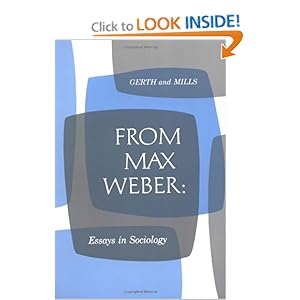
From Max Weber: Essays in Sociology [Paperback], Max Weber (Author), H. H. Gerth (Editor, Translator), C. Wright Mills (Editor, Translator)


About the Author: Max Weber (1864-1920) was a German political economist and sociologist who is considered one of the founders of the modern study of sociology and public administration.


Book reviews: 

  • "Weber is essential to an understanding of sociological theory, and this is the quintessential Weber--a gold mine of insights into the workings of society."--Leslie Wasson, University of South Florida
  • "Still the best compilation of texts by Weber."--Peter Jelavich, University of Texas, Austin
  • "Wonderful....A classic for teaching modern EUuropean intellectual and cultural history."--Marjorie Beale, University of California
  • "An excellent collection of papers from Max Weber. This is must reading for students of sociology."--Sronja Szelenyi, Stanford University
  • "Still the single best book by and about Max Weber."--Terry Boswell, Emory University
  • "The writings selected are representative of a wide range of the author's exceedingly verstaile and comprehensive studies."--Talcott Parsons, Annals of the American Academy of Political Science
  • "A good and accessible compilation of Weber's major themes."--Laurel Kearns, Agnes Scott College
  • "A good, solid anthology; wide-ranging in its contents and should be standard in many sociology courses."--Gregory O'Dea, University of Tennessee at Chattanooga
  • "Superb collection of key texts!"--Szonja Szelenyi, Stanford University


*****

The Theory of Social and Economic Organization Paperback, by Max Weber (Author) , A. M. Henderson (Author) , Talcott Parsons (Editor)


Book Description: 2012 Reprint of Original 1947 Edition. Exact facsimile of the original edition, not reproduced with Optical Recognition Software. ©New Foreword Martino Publishing. This volume contains a full and representative statement of Max Weber's sociological theory, drawn from important publications never previously translated. The book opens with a discussion of the analytical methods of sociology and an application of these methodological conclusions to the broadest classification of social relationship and groups. Nearly half the volume is devoted to a further elaboration of this scheme in the field of economic activity. The typology is copiously illustrated with material from many periods of history and parts of the world. Chapters include: The Fundamental Concepts of Sociology Sociological Categories of Economic Action The Types of Authority and Imperative Co-ordination The Transformation of Charisma in an Anti-Authoritarian Direction Social Stratification and Class Structure


*****

The Marx-Engels Reader (Second Edition) [Paperback], Karl Marx (Author), Friedrich Engels (Author), Robert C. Tucker (Editor)


Book Description: This revised and enlarged edition of the leading anthology provides the essential writings of Marx and Engels--those works necessary for an introduction to Marxist thought and ideology.


*****


YourVietBooks recommends books and articles on and about Vietnam. Categories include: Culture, History, Vietnam War, Politics, Biographies, Contemporary Vietnam, International Relations, Doing Business in Vietnam, Reference and Languages, Zen Buddhism, Philosophy, Art and Literature. Some articles are available only in English, French, German or Vietnamese. Our qualified and experienced translators can provide translations of e-books or articles on demand. Read more...


Samples of Translation | Our Translators | Need a quote? | Contact us